

Built vs. Bought: Is a Pre-Built Gaming PC Actually Worth the Money in 2026?
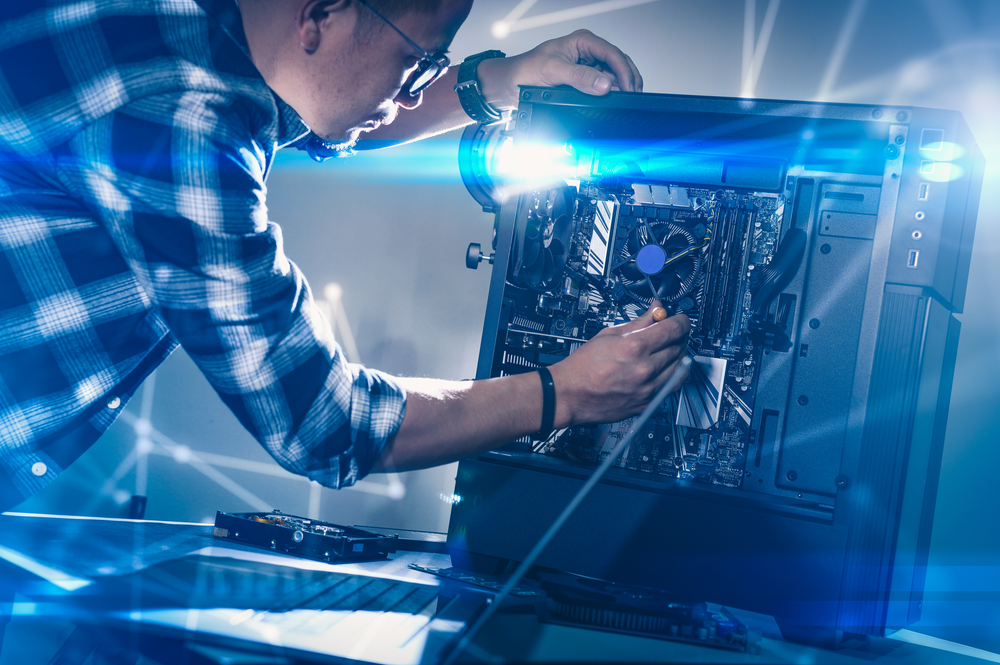
If you have been shopping for a gaming PC lately, you have probably felt the pressure of choice. Do you spend hours researching parts, watching build guides, and wrestling with cable management? Or do you simply pull out your wallet, order a pre-built system, and be gaming by the weekend?
The debate between building your own PC and buying a pre-built one has been going on for decades, but in 2026, the landscape has shifted enough that the old answers do not always apply. Let us break it all down honestly.
The Old Argument: Why Building Always Won
For most of the 2010s, the answer was almost universally the same: build it yourself and save money. The logic was simple. Retailers and manufacturers who sold pre-built systems charged a significant premium for the convenience factor. You could often get noticeably better hardware for the same price by sourcing your own components.
Beyond the cost savings, builders also had full control over every part in their system. You could choose a quieter cooler, a better power supply, or a faster SSD without being forced into whatever a manufacturer decided to bundle together. Pre-built systems were also notorious for cutting corners in areas that were easy to overlook, such as stuffing a powerful GPU into a case with a cheap 450-watt power supply or pairing a high-end processor with slow, low-capacity RAM.
The DIY crowd also pointed to repairability and upgradability. When something breaks in a self-built system, you know exactly what to replace. Pre-built warranties sometimes required you to send the entire machine in for service, leaving you without a computer for weeks.
These arguments were largely valid, and for a long time, building your own PC was the smarter move for almost everyone who was willing to put in the time.
How 2026 Changed the Equation
The gaming PC market in 2026 looks meaningfully different from what it did five years ago. Several converging forces have tightened the gap between pre-built and DIY systems.
First, component pricing has become far more competitive and consistent. The GPU shortage era, which caused graphics card prices to balloon to absurd levels, has largely resolved. Manufacturers have adjusted supply chains, and competition in the GPU space has brought prices closer to MSRP in most cases. This matters because it removes one of the biggest cost advantages that DIY builders used to enjoy.
Second, large system integrators have become significantly more sophisticated. Companies like CyberPowerPC, iBUYPOWER, and even major brands like HP’s OMEN and Dell’s Alienware line have responded to consumer criticism by offering more transparent build configurations. Many pre-built systems in 2026 now come with better-balanced components than they did a few years ago, and the days of a 750-watt PSU being a hidden cost-cut are slightly less common, though not entirely gone.
Third, the time cost of building has become a more honest part of the conversation. Between researching compatibility, waiting on multiple shipments, troubleshooting driver issues, and managing the learning curve, a first-time builder can easily invest 10 to 20 hours before the machine ever boots successfully. For a student, a working professional, or a casual gamer who just wants to play, that time has real value.
Is It Cheaper to Build or Buy a Gaming PC in 2026?
This is the question most people are actually asking, and the honest answer is: it depends, but less dramatically than it used to. For a mid-range gaming PC in the $800 to $1,200 range, building your own system can still save you somewhere between $100 and $200 compared to an equivalent pre-built. That savings is real, but it is not the enormous gap it once was.
At the high end, above $1,500, the DIY advantage tends to grow a little larger. Enthusiast-grade builds allow you to allocate your budget more precisely, spending more on the GPU and CPU while choosing modest but reliable storage and cooling options. Pre-built systems at this price tier often include premium branding and aesthetics as part of the cost, which may or may not matter to you.
At the budget end, below $700, pre-built systems can sometimes actually be more cost-effective because manufacturers buy components at bulk wholesale prices that individual consumers cannot access. A $599 pre-built might use OEM parts you cannot buy retail at those same prices, making it genuinely hard to beat on pure component cost alone.
The keyword question of whether it is cheaper to build or buy a gaming PC in 2026 does not have a universal answer. It depends heavily on your target price range, your patience for deal-hunting, and whether you are counting your own time as a cost.
Is Building a Gaming PC Still Worth It for Casual Gamers?
This is where the conversation gets more nuanced. If you are a hardcore enthusiast who loves the process of building, wants to overclock, plans to upgrade frequently, and enjoys having deep knowledge of your system, then building your own PC is absolutely still worth it. The satisfaction alone has real value for that kind of person.
But for casual gamers, the calculus looks different. If you play a handful of popular titles, want stable performance, and do not plan to tinker under the hood, a well-chosen pre-built system in 2026 can be a perfectly reasonable purchase. The key is knowing what to look for and what to avoid.
When evaluating a pre-built, always check the PSU wattage and brand, since this is still one of the most commonly skimped components. Verify the RAM speed and whether it is running in dual-channel configuration. Look at the storage situation, specifically whether the system uses an NVMe SSD or an older SATA drive. And pay close attention to the cooling solution, because many budget pre-builts still use minimal airflow cases with inadequate fans.
If a pre-built passes those basic checks and the price is competitive, there is no shame in buying it. The stigma around pre-builts has faded for a reason. The quality floor has risen.
For casual gamers specifically, the reduced complexity is a legitimate feature. You do not need to watch hours of tutorials. You do not need to worry about whether your RAM is on the motherboard’s QVL list. You plug it in, install your games, and play. That experience has genuine value that the build-it-yourself crowd sometimes dismisses too quickly.
Conclusion
The built vs. bought debate in 2026 is less of a landslide than it used to be. Building your own gaming PC still offers meaningful benefits, including customization, upgradability, and modest cost savings in most price ranges. But pre-built systems have matured considerably, and for casual gamers or anyone who values their time over marginal savings, they represent a legitimate and increasingly competitive option.
The smartest approach is to price out both options before deciding. Use a parts picker tool to spec out your ideal build, then compare it honestly against pre-built systems in the same range. You might be surprised how close the numbers are. Whatever you choose, the best gaming PC is ultimately the one that gets you playing the games you love without unnecessary frustration.
Need Computer Services Near You?
Here at B & L Custom Computers, we specialize in creating custom-built computers to meet the unique needs of our customers. With 18+ years of experience, we also offer high-quality newly built & refurbished computers that look and perform like new. Our services extend beyond sales to include computer repairs, upgrades, data migration, and recovery. Whether you need a new computer, a repair, or help with virus removal or spamware, our experienced team is here to provide expert assistance. Contact us today to learn more about what we can do for you!